

Crossing the Bridge: The Process Behind an Illustration
Exploring the balance between creativity, technique, and discovery

It all started because I needed new pieces for my portfolio—nothing particularly profound. But as I worked on it, the piece took on a life of its own, becoming more than just an exercise.
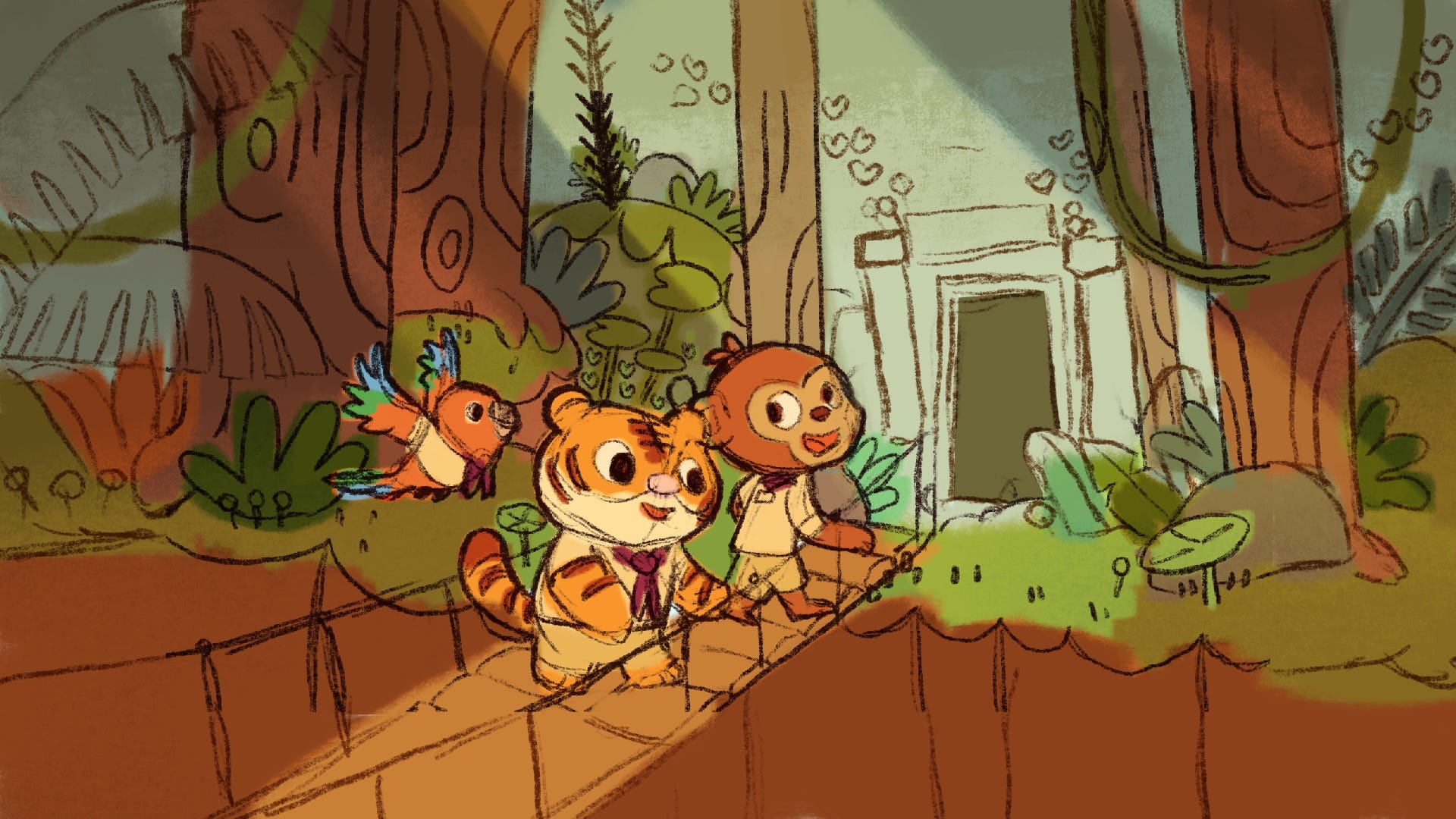
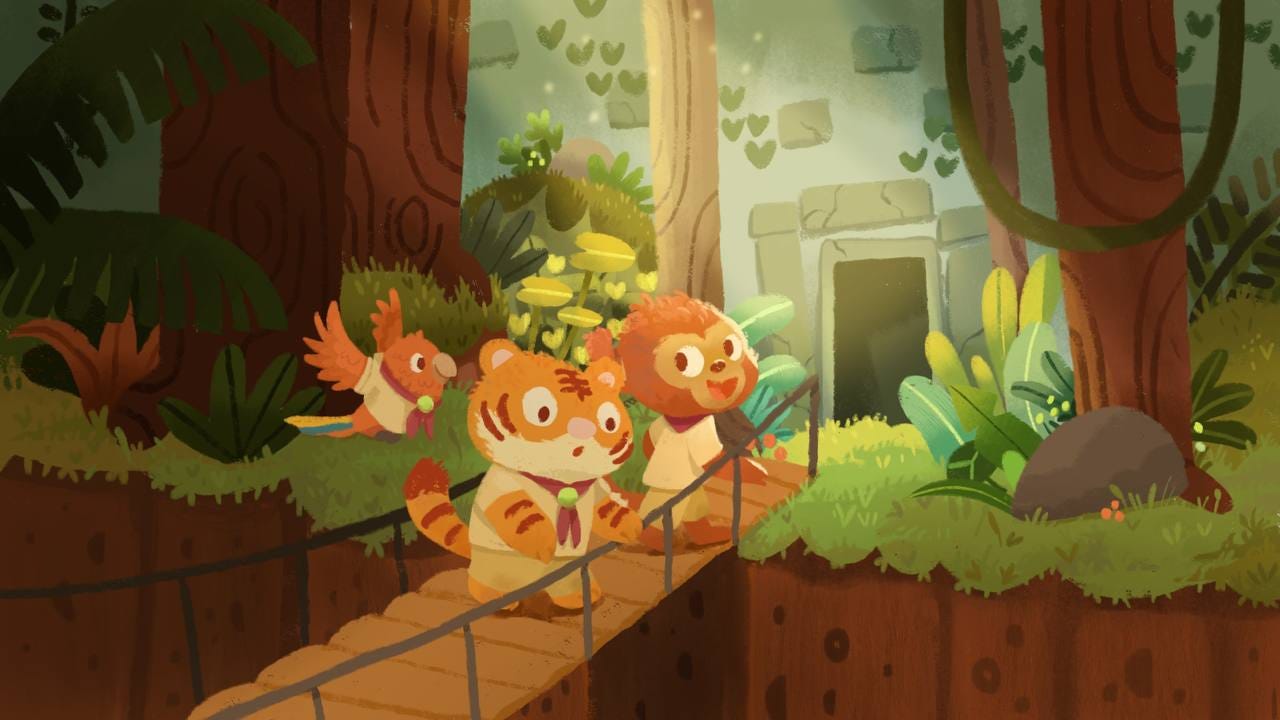
The central theme is adventure—the thrill of doing something new. In this story, our characters—a little tiger, a macaw, and a monkey—are crossing a bridge that separates them from their destination: a hidden jungle temple. Each one reacts differently: the tiger, fearful yet curious; the monkey, enthusiastic and eager to help; the macaw, free and carefree.
At first, the temple wasn’t in the scene. Instead, there was a waterfall the characters were searching for. But it was too far from the bridge and diluted the sense of exploration, so I transformed it into the entrance of a ruined temple.


Applying What I’ve Learned
This piece challenged me in many ways. I’ve received a lot of feedback from portfolio reviews and the mentorship I’m currently in, and I decided this would be the project where I’d start applying that advice.
1. A More Hand-Drawn Feel
The flat, vector-like style I used before was left behind. To give the characters more fluidity and natural movement, I drew them separately, focusing on making them feel more expressive and alive
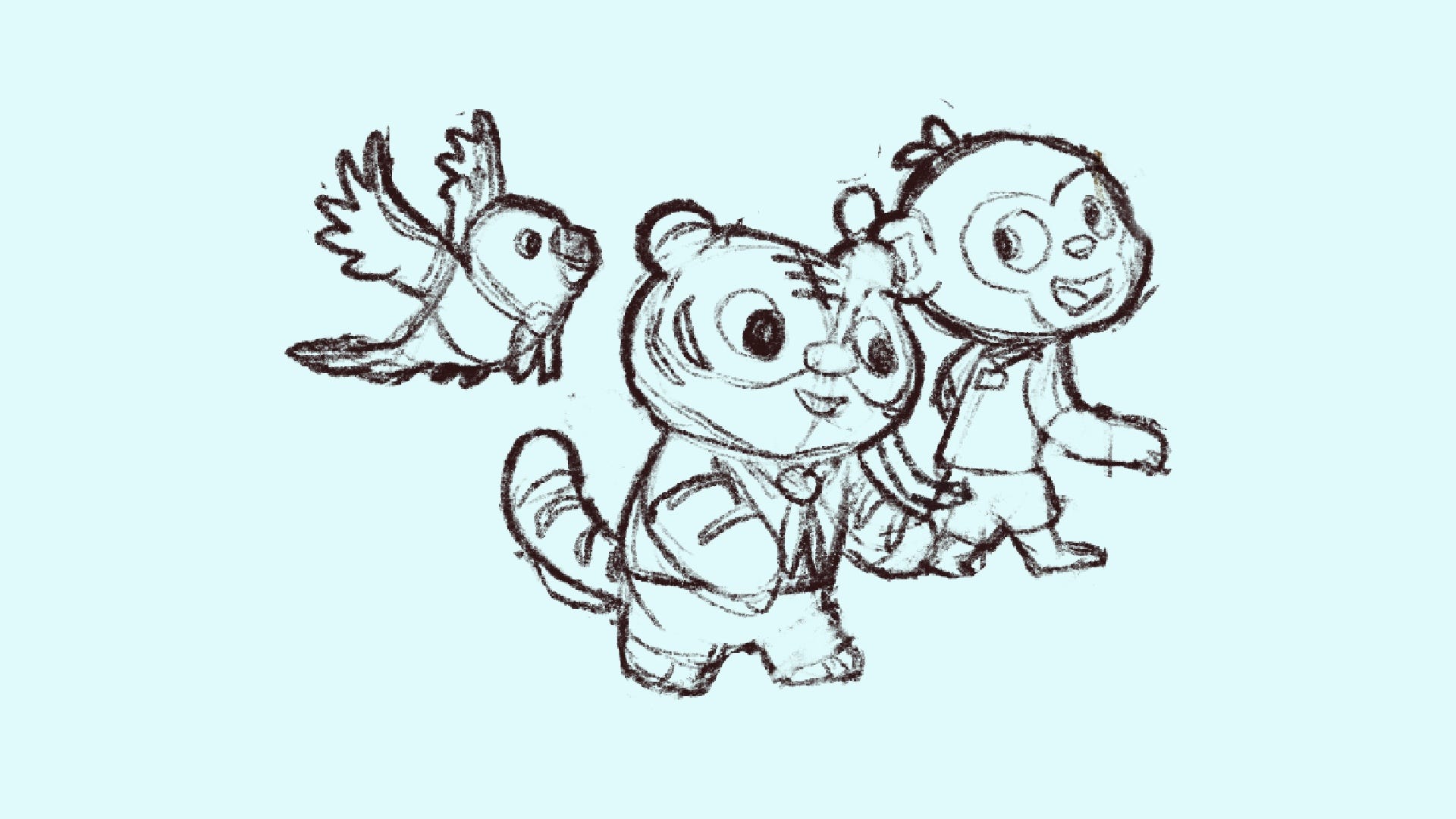
2. Incorporating More Textures
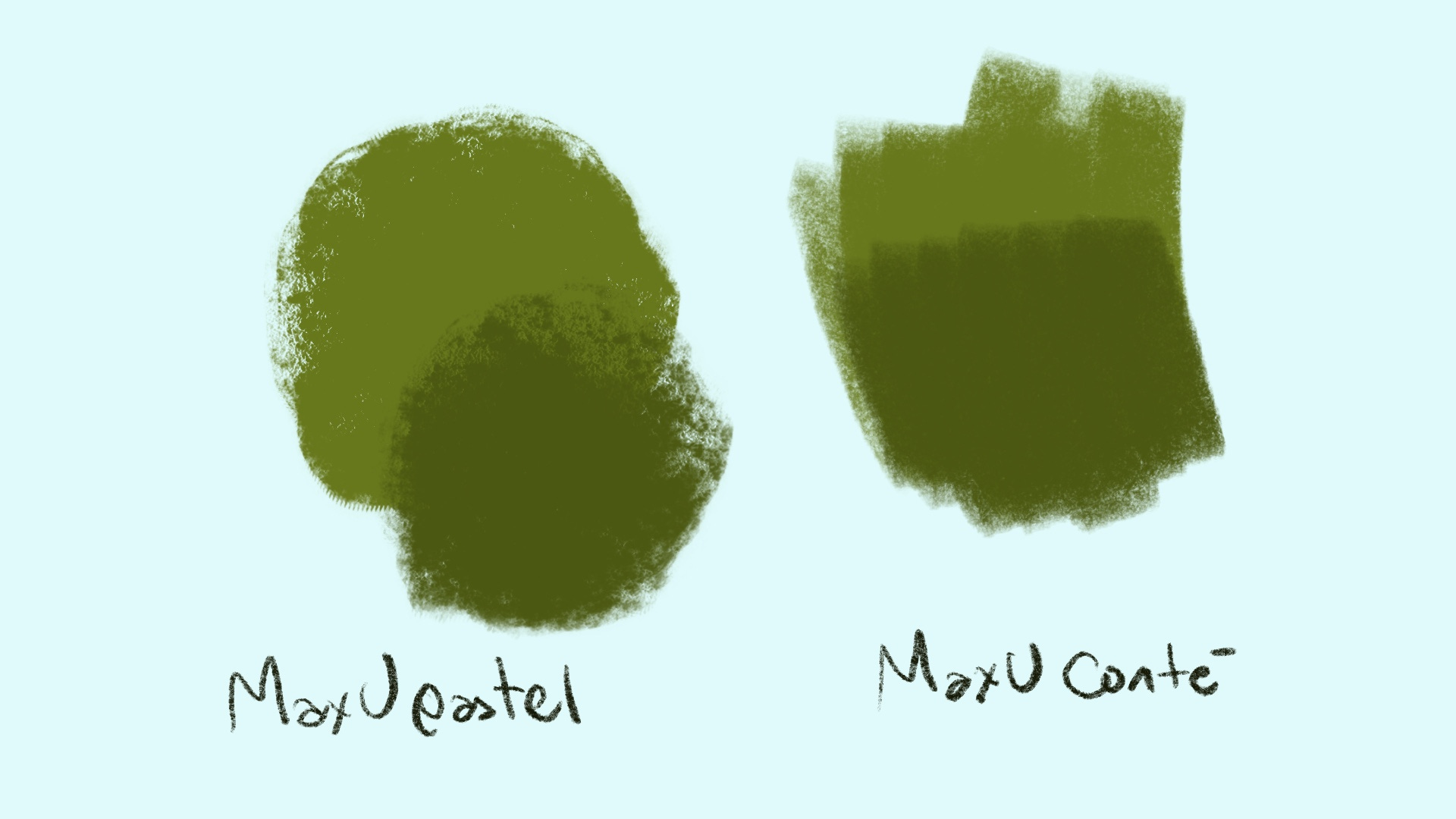
This was the biggest challenge. In digital art, texture is a vast concept—should I use brushes that mimic traditional media? Scan analog textures? Rely on digital repositories? Use specific brushes? There were so many options that just deciding how to approach it was a task in itself.
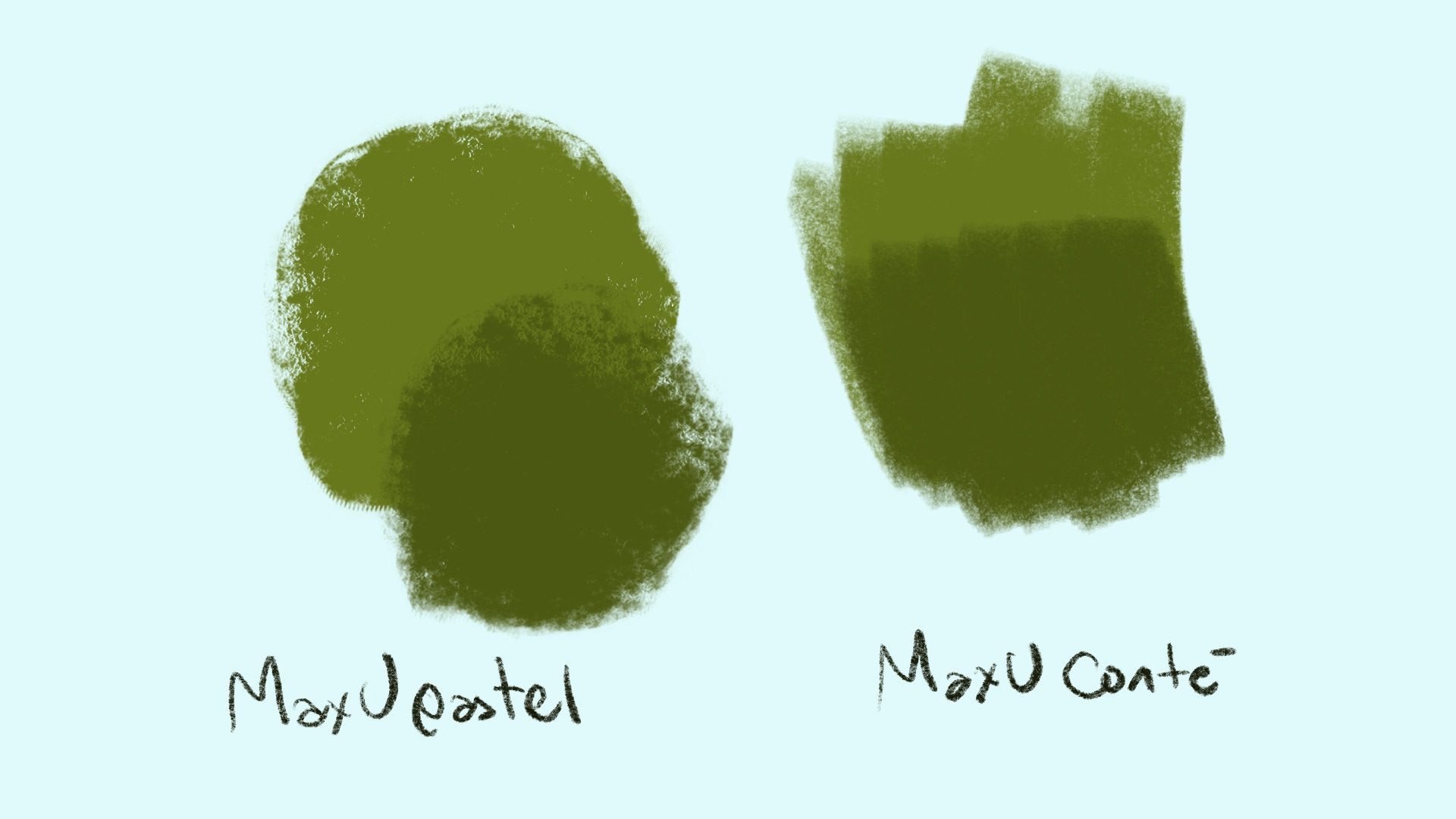
This time, I kept it simple: brushes that mimic pastels and conté. I loved the warmth they added and the way they broke the digital cleanliness without losing control over the image.
Color & Composition
Designing the composition flowed relatively well. After a few attempts, I found an arrangement that effectively conveyed the idea of exploration and adventure.
Then came the color phase. I knew green would be key, but should it be warm or cool? In the end, I chose warm greens to enhance the jungle’s vibrant atmosphere, using light to guide the eye toward the temple—the final destination for our little explorers.
The Real Challenge: Details & Textures
This is where I spent the most time. Applying textures without feeling like I was losing control was tricky. Every stroke was carefully considered before it existed. I experimented with selection tools, tested different brushes, erased, redrew.
It took longer than expected, but it was worth it.
Because in the end, making art is like this: trying, failing, fixing, and trying again. It’s a path full of doubts but also of discoveries.
And that’s what I love the most.
Because every illustration is a little journey—a bridge between what I imagine and what I bring to life.

Cruzando el Puente: El Proceso Detrás de una Ilustración
Nació porque necesito piezas nuevas para mi portfolio. Nada trascendental ahí. Pero cuando empecé a trabajar en ella, la pieza tomó su propio rumbo, convirtiéndose en algo más que un ejercicio.
El tema central es la aventura: la emoción de hacer algo nuevo. En esta historia, nuestros personajes —un tigrito, una guacamaya y un mono—se encuentran cruzando un puente que los separa de su destino, un templo oculto en la jungla. Cada uno reacciona de forma diferente: el tigrito, temeroso pero curioso; el mono, entusiasta y dispuesto a ayudar; la guacamaya, libre y despreocupada.
Inicialmente, el templo no existía en la escena; en su lugar, había una cascada que los personajes buscaban. Pero estaba demasiado lejos del puente y diluía el punto de la exploración, así que la transformé en la entrada a un templo en ruinas.


Aplicando lo aprendido
Esta pieza ha sido un desafío en muchos sentidos. He recibido varias críticas en portfolio reviews, y en la mentoría que estoy haciendoy decidí que este sería el proyecto donde comenzaría a aplicar esos consejos.
1. Más sensación de dibujo a mano
El estilo plano y vectorial que solía usar quedó atrás. Para darle más fluidez y naturalidad a los personajes, los dibujé aparte, enfocándome en que se sintieran más gestuales, más vivos.
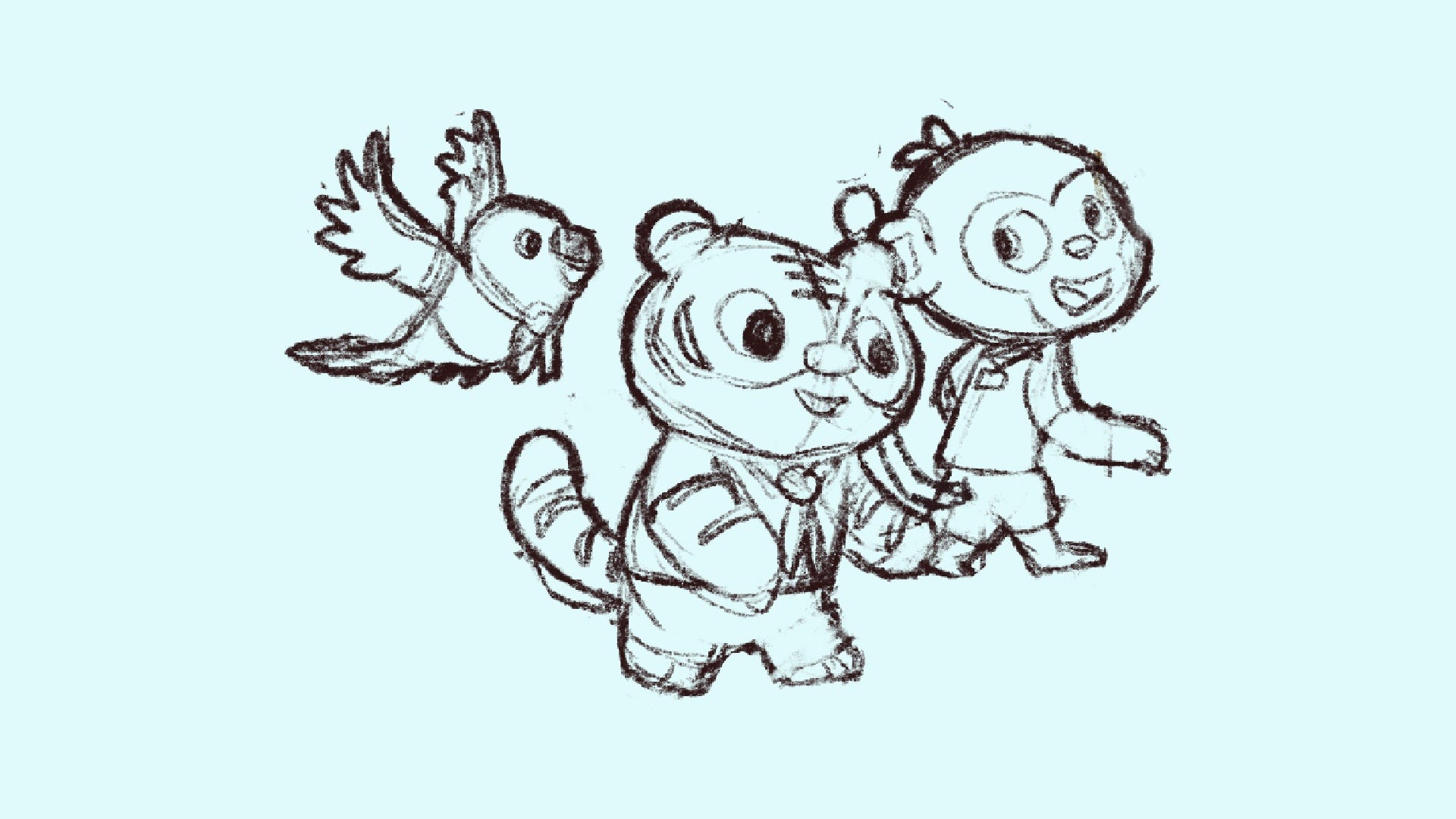
2. Incorporar más texturas
Este fue el mayor reto. En digital, el concepto de textura es inmenso: ¿uso pinceles que simulan medios tradicionales? ¿Escaneo texturas analógicas? ¿Me apoyo en repositorios digitales? ¿Uso brushes específicos? Hay tantas opciones que decidir cómo abordarlo fue una tarea en sí misma.
Esta vez, opté por lo sencillo: pinceles que imitan medios como la tiza y el conté. Me gustó la calidez que aportan y la manera en que rompen la limpieza digital sin perder control sobre la imagen.
El color y la composición
Diseñar la composición fue relativamente fluido. En un par de intentos, encontré una disposición que transmitía bien la idea de exploración y aventura.
Luego vino la fase de color. Sabía que el verde sería clave, pero ¿cálido o frío? Finalmente, elegí verdes cálidos, reforzando la atmósfera vibrante de la jungla y utilizando la luz para guiar la mirada hacia el templo, el destino final de nuestros amigos.
El verdadero reto: Detalles y texturas
Aquí fue donde me detuve más tiempo. Aplicar texturas sin sentir que estaba perdiendo el control fue complicado. Cada trazo estuvo pensado varias veces antes de existir. Experimenté con el lazo, probé diferentes pinceles, borré, redibujé.
Fue un proceso más largo de lo que esperaba, pero valió la pena.
Porque, al final, hacer arte es así: es probar, equivocarse, corregir y volver a intentarlo. Es un camino lleno de dudas, pero también de descubrimientos.
Y eso es lo que más me gusta.
Porque cada ilustración es un pequeño viaje, un puente entre lo que imagino y lo que logro plasmar.
Love this new piece! And the evolution of your new style… gorgeous!